Dice by materialCompared
DnD dice materials: resin, gemstone, glass and wood compared
Plastic, resin, liquid core, metal, gemstone, glass and wooden dnd dice compared on how they are made, edges, weight, fragility and care, with maker sources.
We may earn a commission when you buy through links on this page. Listings and prices come from our partners and change often. How we make money.
Key facts
- Plastic set weight
- About 1 oz (28 g) for a typical polymer set (Die Hard Dice)
- Rounded edges
- Mass-produced plastic dice are polished in a tumbler, which rounds the edges
- Gemstone
- Hard but brittle; URWizards says always roll on a soft surface
- Liquid core
- A sphere of distilled water and glitter centered in a resin shell (Dispel Dice)
- Resin cleaning
- Mild dish soap, warm water and a soft cloth (Dispel Dice)
Choose plastic or resin for everyday games: they are light, easy to replace and fine on any mat. Choose metal for weight, and gemstone, glass or wood as display-worthy sets you roll gently on a padded tray, because their makers say hard surfaces chip or scratch them.
DnD dice materials at a glance
| Material | How it is made | Edges | Weight | Main risk | Where to roll |
|---|---|---|---|---|---|
| Plastic (acrylic, polymer) | Cast in molds, painted, tumble polished (Athenopolis) | Rounded by tumbling | About 1 oz per set (Die Hard Dice) | Scratched by metal dice (Die Hard Dice) | Anywhere |
| Resin (handmade) | Hand-poured (Dispel Dice), hand polished (Bards and Cards) | Sharp | Not stated by makers | Warps in heat, brittle in cold (Dispel Dice) | Board, map, neoprene or felt (Dispel Dice) |
| Liquid core resin | Water-filled sphere centered in a resin shell (Dispel Dice) | Sharp | Not stated | As resin | As resin |
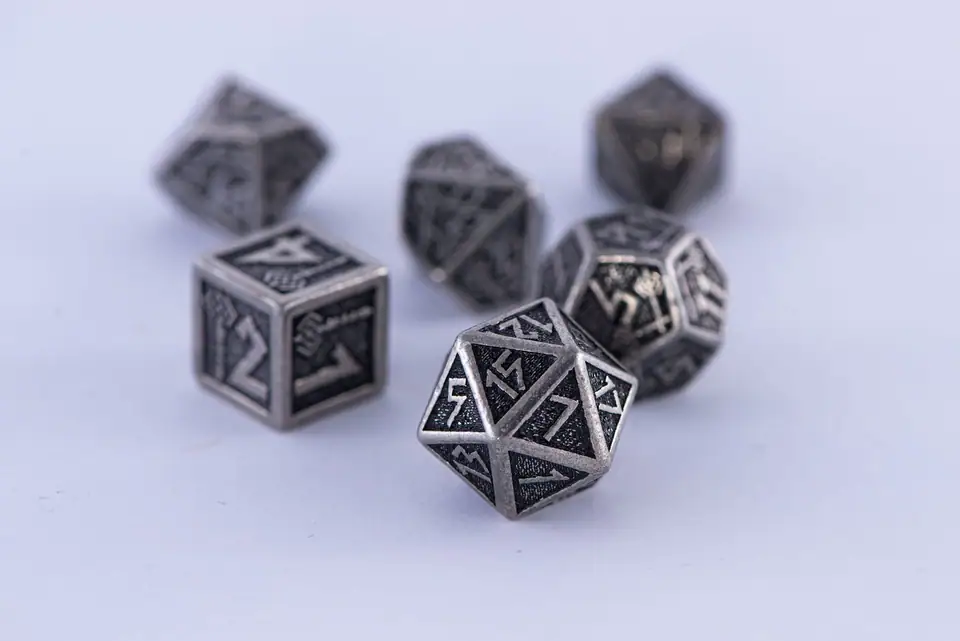
| Metal | Cast zinc; tungsten is milled | Varies | 4 to 5x plastic (Die Hard Dice) | Can damage a game board (Norse Foundry) | A tray |
| Gemstone and stone | Natural stone | Varies | Not stated | Brittle, chips (URWizards) | Padded mat or tray (Norse Foundry) |
| Glass | Glass | Varies | Not stated | Chips when dice knock together (Arcane Eye) | Padded mat or tray (Norse Foundry) |
| Wood | Machined from solid stock (Artisan Dice) | Varies | Lighter than expected (Gaming Trend) | Not stated by makers | Not stated |
“Not stated” means none of the sources we used published it. Treat any weight claim on a listing for those materials as the seller’s own.
Plastic dice: the standard set
Plastic is the material of mass-produced sets. Chessex casts its dice from a hard thermoplastic in molds, paints them, and polishes them in a rock tumbler, according to a 2016 buying guide on Athenopolis. The tumbling removes paint from everywhere except the recessed numbers, and it also rounds the edges.
Die Hard Dice lists a typical plastic set at about 1 ounce (28 grams). That lightness is why plastic dice roll farther than metal ones. If you are still working out which seven dice a set includes, see what dice you need for D&D.
Resin, sharp edge and liquid core dice
Handmade resin dice are poured by hand. Dispel Dice describes its dice shells as translucent hand-poured resin, sometimes tinted with pigments for a color gradient. It describes sharp edge dice as having “corners and edges that are crisp and well-defined.” The retailer Bards and Cards says its sharp edge resin dice are “hand polished to keep their beautiful sharp edges” and are not tumbled.
A reviewer at Arcane Eye found Runic Dice resin sets tough enough for a full campaign, with points he compared to “the pointy end of a Rogue’s blade.” Dispel Dice adds that hard surfaces such as glass, stone or hardwood can chip those corners.
Sharp edge vs rounded edge dice
The difference comes from the finishing step. Tumble polishing, used on mass-produced plastic dice, rounds the edges (Athenopolis). Hand polishing, used on sharp edge resin dice, keeps them crisp (Bards and Cards).
Dispel Dice claims sharp edges stop a die quickly and give “a more even distribution” of results, and says casinos use only this style. That is a maker’s claim. We found no published test comparing sharp edge and rounded dice from the same batch.
What is inside a liquid core die?
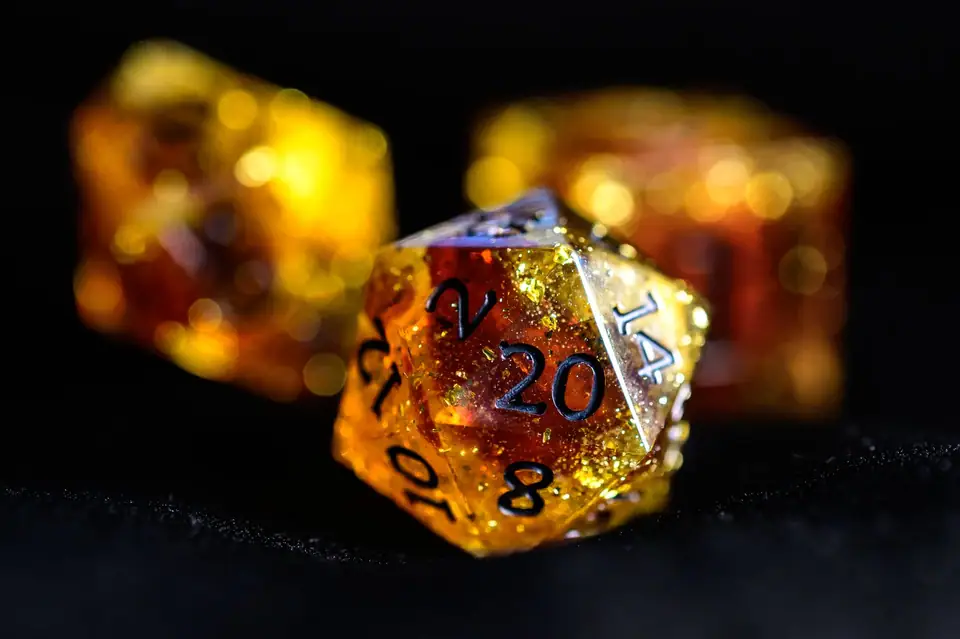
Dispel Dice places a hollow sphere of distilled water, mixed with pigments, glitter, mica powder or mylar, in the center of a translucent resin shell. The maker says its liquid core sets are balanced because they are sharp edge dice.
How to clean resin dice
Dispel Dice gives a short routine:
- Mix a mild solution of dish soap and warm water.
- Wipe each die with a soft cloth.
- Use a soft-bristle toothbrush in the numbers and design grooves.
- Dry the dice fully.
The same page warns that long exposure to cold makes resin brittle, heat warps it, and sunlight discolors it. So a hot car or a sunny windowsill is a poor place to leave a set.
Resin, sharp edge and liquid core dice sets
Shop the range
Browse current resin dice sets on eBay, new condition only.
Shop resin dice setsOpens eBay in a new tab. Check condition, seller feedback and returns on the listing.
Metal dice in brief
Metal is the heavy option. Die Hard Dice puts its zinc sets at 4 to 5 times the weight of plastic, and makers advise rolling them in a tray. The details, including hollow sets, tungsten and a fairness study, are in our metal dice guide.
Gemstone, glass and stone dice
Gemstone dice are made from natural stone. URWizards describes them as “hard, but they can be brittle,” and gives firm rules:
- Always roll on a soft surface, such as a tray with felt or leather lining.
- Never roll two gemstone dice together, or roll them with metal or harder resin dice.
- Clean with a microfiber cloth; for more, use lukewarm water and a very mild diluted soap, then dry at once.
- Avoid harsh chemical cleaners, abrasive scrubbers and ultrasonic cleaners.
Norse Foundry’s care page covers gemstone and glass together. It advises a padded mat or a tray with a padded insert, and says to avoid unpadded wooden trays and glass, wood or metal tables. It also says to skip dice towers and dice cups, because the repeated impacts raise the risk of damage.
Glass behaves much the same. The Arcane Eye reviewer called Runic Dice’s glass sets delicate and warned against rolling several together, since they can chip as they tumble.
Gemstone, glass and wooden dice sets
Shop the range
Browse current gemstone, glass and wooden dice on eBay, new condition only.
Shop gemstone, glass and wooden diceOpens eBay in a new tab. Check condition, seller feedback and returns on the listing.
Wooden and bone dice
Artisan Dice makes wooden sets and also works in bone, antler, horn and mammoth ivory. Its FAQ says the dice are machined from solid stock one at a time, using CNC machines plus hand finishing, so they “do not have vacuum pockets like injection molded dice.”
A Gaming Trend reviewer found an Artisan Dice olive wood set, with brass inlaid numbers, “considerably lighter weight than expected.” Light dice roll farther, so a tray with walls helps.
For odd shapes and collector pieces beyond the standard set, see our dice wall of fame.
How to check whether dice are balanced
The saltwater float test is the best-known home method. Gareth Branwyn described his attempt in Make: in 2015:
- Dissolve salt in room-temperature water until a die floats. He started with 6 tablespoons in 1/3 cup, then needed close to half salt, and found Epsom salt worked better.
- Float the die and spin it.
- Repeat many times and note whether one face keeps ending on top.
- Rinse and dry the dice afterward.
Branwyn noted two limits. Many of his dice would not float however much salt he added. He also observed that translucent dice tended to look more balanced, perhaps because flaws inside them are visible. Metal dice sink, so the test does not work for them. Treat a float result as a hint, not proof; a long run of recorded rolls is the fuller check.
Every material here fits into a full seven-die set; our DnD dice sets guide covers how to choose one.
Frequently asked questions
What is the best material for DnD dice?
For everyday play, plastic or resin: both handle normal rolling on a mat or board. Metal suits players who want weight and have a tray. Gemstone and glass are for careful rollers, because makers say they chip on hard surfaces.
How do you clean resin dice?
Dispel Dice recommends a mild solution of dish soap and warm water with a soft cloth, and a soft-bristle toothbrush for the numbers and grooves. Dry them afterward and keep them away from long heat, cold and sunlight.
Are sharp edge dice better than rounded dice?
Makers of sharp edge dice say the crisp edges stop dice quickly and give a more even spread of results. Rounded edges come from tumble polishing on mass-produced dice. No published test we found compares the two directly.
Do gemstone dice break easily?
They can chip. URWizards calls gemstone dice hard but brittle, and Norse Foundry advises a padded mat, rolling one die at a time, and skipping dice towers and dice cups.
How does the saltwater test for dice work?
You dissolve enough salt in water to float a die, spin it many times, and watch whether the same face keeps coming up. The Make: writer who tried it needed close to half salt and found Epsom salt worked better, and many dice never floated at all.
Sources
- Buying diceAthenopolis
- Metal vs. Plastic DiceDie Hard Dice
- Premium Handcrafted Sharp Edge Inclusion DiceBards and Cards
- How to care for sharp-edge resin DnD diceDispel Dice
- Are liquid core dice balanced?Dispel Dice
- How to Keep Gemstone Dice PerfectURWizards
- Gemstone & Glass Dice Care DirectionsNorse Foundry
- Runic Dice Product Spotlight: Gemstone Glass and Resin Dice SetsArcane Eye
- FAQArtisan Dice
- Artisan Dice Bethlehem Olive Wood Archdruid dice reviewGaming Trend
- How to Check the Balance of Your Gaming DiceMake: